EN

How Can Businesses Source Quality Washers in Bulk?
Buying a washer in volume is a specification and supply-control task, not simply a price comparison. A flat, spring, or specialty washer can be a small line item, yet an incorrect inside diameter, thickness, coating, or hardness class can disrupt assembly across an entire production lot. For buyers serving construction, machinery, electrical, or export projects, the practical goal is to make each requirement testable before a purchase order is released.
A reliable bulk washer process starts with the application, converts that information into a clear RFQ, and then verifies that a supplier can repeat the approved result. The steps below help purchasing teams compare quotations without reducing the decision to unit price alone.
1. Define the washer by function before requesting prices
The word washer is broad. In a bolted joint, a plain washer may spread bearing load, protect a mating surface, provide a defined bearing area, or support a fastening stack. A locking design may address vibration-related loosening, while a large outside diameter may be needed for softer material or an oversized hole. Start with the joint and installation method rather than a catalog image.
Your internal request should state whether the part is plain, spring, fender, sealing, tab, tooth, or another defined type. It should also identify the mating fastener, the application environment, expected load, vibration exposure, and any installation-tool constraints. If the connection is outdoors, coastal, chemical-exposed, or subject to thermal cycling, material and finish deserve as much attention as dimensions.
A useful principle is to avoid over-specifying strength when the actual need is corrosion resistance, fit, or bearing area. Conversely, a thin part with the right appearance may still be unsuitable when the joint needs a controlled hardness or a particular standard. Ask engineering, quality, and assembly teams to agree on the functional requirement before the RFQ moves to a washer supplier.
2. Build an RFQ that makes quotations comparable
A vague request for “M8 washers” invites quotations for parts that look similar but are not necessarily equivalent. For each bulk washer line, include the information that lets suppliers quote the same item:
- Washer type, nominal size, inside diameter, outside diameter, and thickness.
- The applicable drawing or standard, including the edition or project requirement where relevant.
- Material grade and any required mechanical property, such as a specified hardness class.
- Surface treatment, coating thickness where required, and corrosion-test expectation when applicable.
- Quantity per size, forecast demand, packaging format, labeling, and lot-separation rules.
- Required documents: inspection report, material certificate, certificate of conformity, or traceability record, if your project requires them.
- Requested samples and the acceptance checks that will be used.
For example, ISO 7089 is commonly used as a reference for normal-series, product-grade-A plain washers and distinguishes hardness classes such as 200 HV and 300 HV. That example does not replace a project specification: buyers should confirm the applicable standard, grade, and revision with their technical team. Its value is that a named requirement makes a quality washer easier to inspect than an undocumented “standard” part.
3. Screen each washer supplier for repeatability
Initial price and response speed matter, but bulk purchasing exposes the supplier’s process more clearly than a small order does. Ask how raw material, forming, heat treatment where applicable, finishing, sorting, and final inspection are controlled. A capable washer supplier should be able to explain how lots are identified and how inspection records relate to the shipment.
Focus your comparison on evidence rather than sales language. Request a current product drawing or dimensional table, a sample inspection report, examples of labeling, and a description of how nonconforming material is isolated. If documentation is critical for an engineering project, ask whether material certificates and batch-linked records can accompany the order. The presence of a certificate alone is not enough; verify that its scope corresponds to the offered washer, lot, and requested condition.
For international sourcing, communication quality is also operationally important. Confirm that the supplier can review units, tolerances, metric or inch conventions, packaging instructions, and document names in the language used on your purchase order. Qingdao Jeekuu Hardware Products Co., Ltd. describes support for DIN, ISO, and ASTM-oriented fastener requirements, batch traceability, samples, and export documentation; as with any potential source, buyers should validate the specific capability against their own washer specification and approval process.
4. Approve samples, then lock the inspection plan
Many teams discover too late that an approved sample and the production shipment were not controlled in the same way. Treat sample approval as the beginning of the control plan, not the end of sourcing. Keep an approved reference sample or a signed dimensional record, and state which checks apply to every production lot.
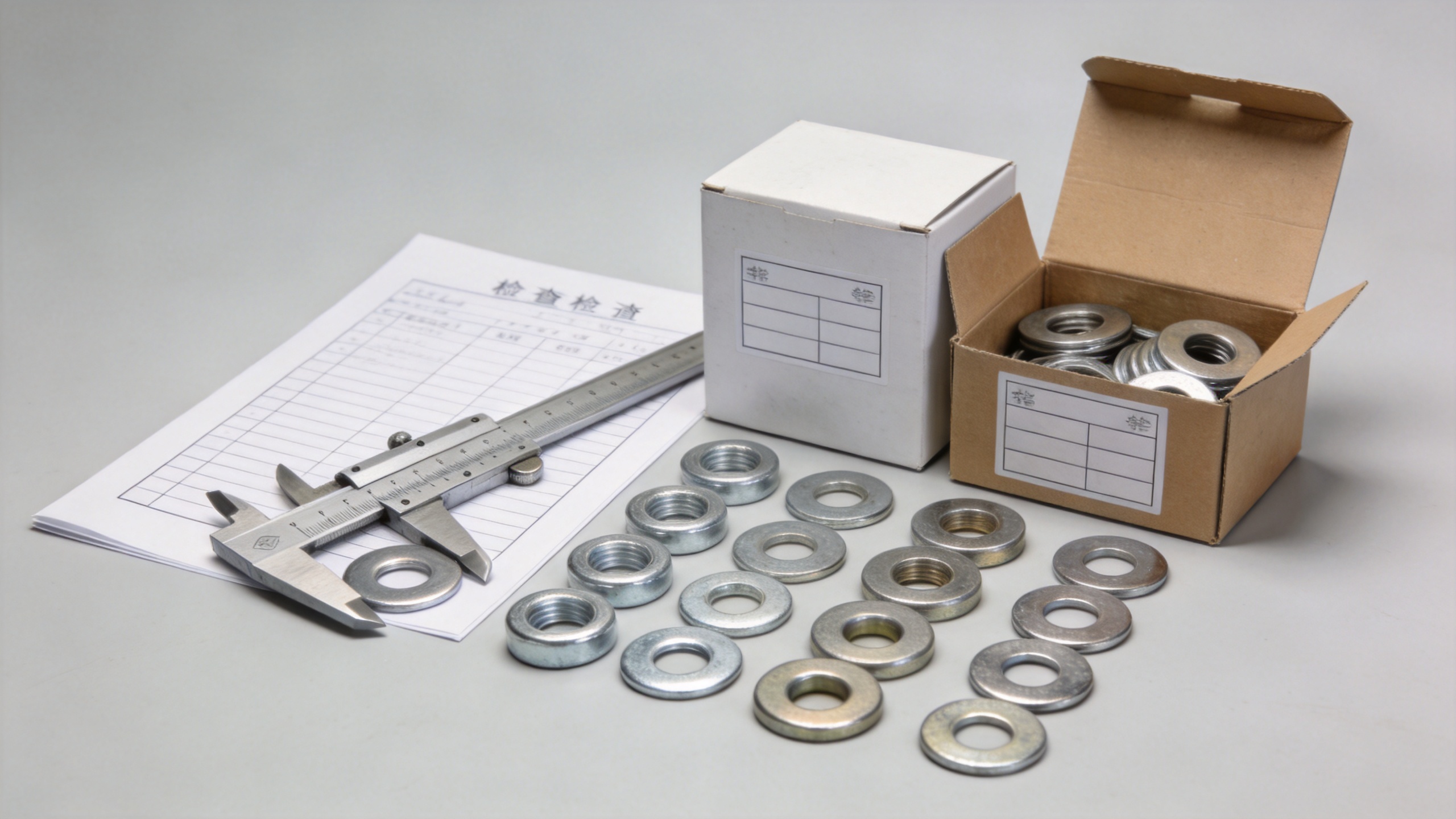
A practical incoming or pre-shipment plan can cover inside and outside diameter, thickness, burrs, flatness where relevant, finish coverage, visual defects, marking or label accuracy, and count per package. The right sample size and test method depend on risk, quantity, and the application; quality personnel should set those parameters. When a deviation is found, require the supplier to identify the affected lot, contain it, and provide a corrective-action response before mixed stock reaches the line.
This approach matters because the hidden cost of a low quote is often not the washer itself. It is sorting labor, interrupted assembly, replacement freight, or a delayed project review. A bulk washer purchase becomes more predictable when the PO connects acceptance criteria to a defined lot and package label.
5. Compare landed terms, packaging, and supply continuity
Washer wholesale decisions should include more than the ex-works figure. Compare the unit price together with tooling or setup charges, minimum order quantity, sample lead time, production lead time, packing method, payment terms, and the shipping term proposed. For export orders, clarify whether the quotation is EXW, FOB, CIF, or another agreed term, and write down who arranges freight, insurance, export documentation, and destination handling.
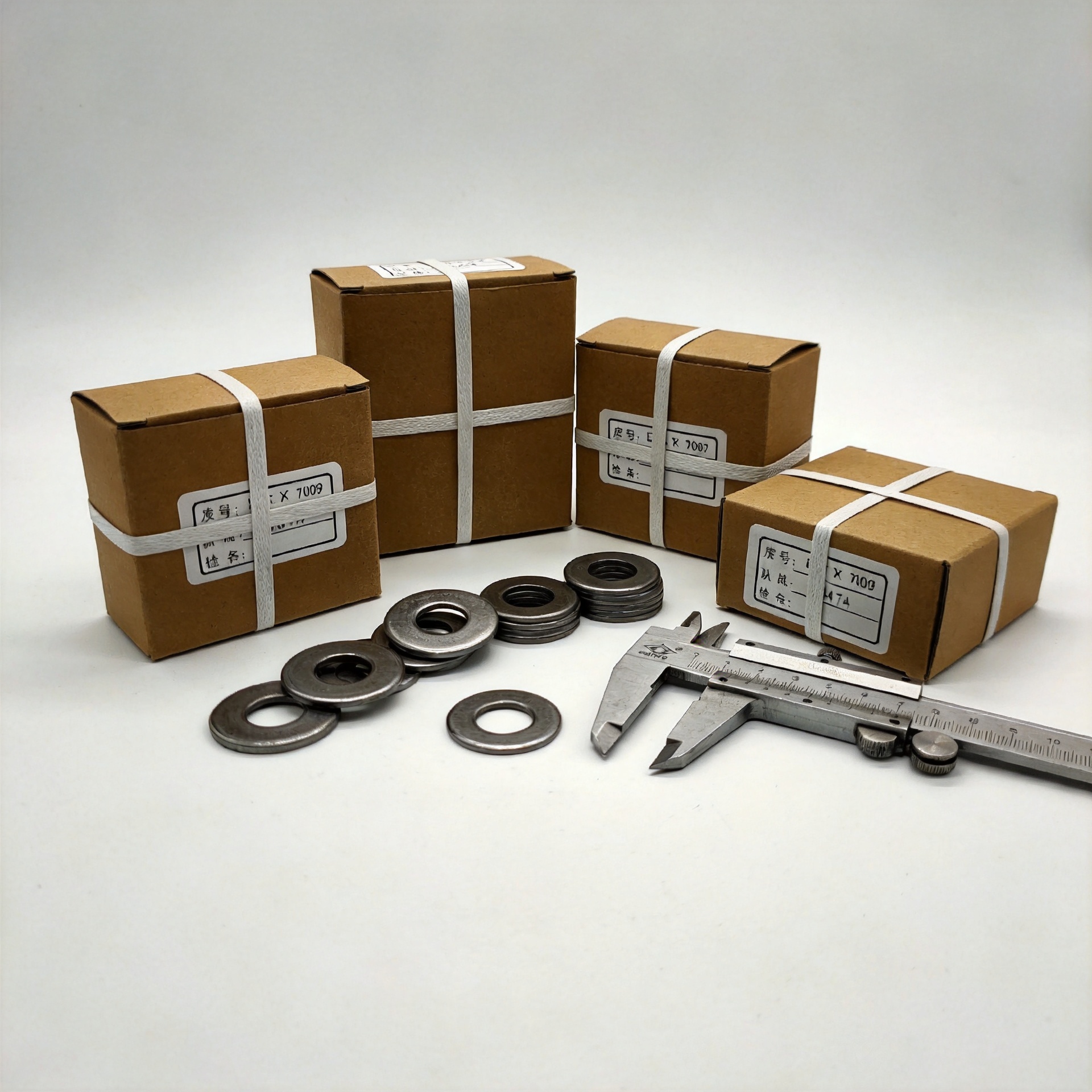
Packaging deserves a line on the RFQ. Small washers are easy to mix, count incorrectly, or expose to moisture during storage and transit. Specify inner-bag quantity, carton quantity, label content, pallet requirements, and whether anti-rust protection is needed. If your factory uses several adjacent sizes, require clear lot and size labels that make receiving checks quick.
For recurring programs, ask how the supplier manages capacity and material availability. A stable quote is useful only if the source can maintain the approved specification through later releases. It may be sensible to qualify a second source for high-impact sizes, but each source should go through the same sample and documentation process.
6. Use a simple bulk washer decision checklist
- Confirm function: define what the washer must do in the joint and the environment it will face.
- Write the technical requirement: list dimensions, tolerances, material, finish, standard or drawing, and required documents.
- Request like-for-like quotes: send the same RFQ and packaging assumptions to each candidate.
- Verify the supplier: review sample evidence, lot identification, inspection process, communication, and export readiness.
- Approve with measurable checks: record the sample result and define production-lot acceptance criteria.
- Release the PO carefully: repeat the approved specification, labels, packaging, delivery term, and document requirements.
What makes a quality washer purchase sustainable?
The sustainable choice is the source that can repeatedly provide the required washer—not merely a part that passes a visual check once. A clear RFQ, a documented sample, sensible lot controls, and realistic shipping terms give a purchasing team more leverage than negotiating on price alone. If the order includes unusual geometry, special material, or demanding corrosion exposure, ask for an early technical review and allow time for sample validation.
For a first washer wholesale order, start with a defined pilot lot and use its receiving data to refine the next release. That measured approach creates a practical record of dimensions, finish, packaging, and supplier responsiveness, so future bulk washer sourcing decisions can be faster and better informed.