EN

How to Stop Galvanic Corrosion Between Dissimilar Metal Fasteners
Galvanic corrosion can turn a sound joint into a maintenance problem long before a fastener loses its visible shape. It occurs when dissimilar metals are electrically connected and an electrolyte such as rainwater, washdown fluid, salt spray, or condensation bridges them. The practical objective is simple: do not let a fastener become part of a working corrosion cell.
As an engineer reviewing joint failures, I start with the entire assembly rather than the bolt alone. A stainless fastener in aluminum, a zinc-coated threaded fastener near copper, or a mixed-metal enclosure can all behave differently once moisture is trapped at the metal contact. The following sequence helps design, install, and maintain a joint with fewer surprises.
Confirm that the joint can form a galvanic cell
Three conditions are needed: metals with different electrochemical potentials, metallic contact between them, and a conductive liquid path. Remove any one condition and the galvanic reaction is interrupted. This distinction matters because ordinary surface rust is not automatically galvanic attack. Look for corrosion concentrated around the metal-contact boundary, coating damage near a washer, powdery deposits on aluminum, or rapid loss of the less noble metal.
Begin by recording each material in the load path: the base material, inserts, washers, nuts, clips, coatings, and the mechanical fastener itself. Include plating and surface treatments. A plated part may govern the early exposure behavior even when the core alloy seems compatible on a drawing.
Use the service environment, not a generic metal chart, to judge risk
A galvanic series ranks materials in a specific electrolyte, so seawater, industrial washdown, and sheltered indoor humidity do not create identical risk. ASTM G82-98(2014) is a useful guide for developing and using a galvanic series, but it does not replace a review of temperature, wet time, contaminants, crevices, and coating condition in the actual installation.
For a joint that will remain dry and clean, a dissimilar-metal pairing can be manageable. For an outdoor cabinet, a coastal platform, or a process area that is regularly washed, assume the risk is higher. Specify the environment on the joint drawing so purchasing does not substitute a visually similar fastener with an incompatible finish.
Break the electrical path with deliberate isolation
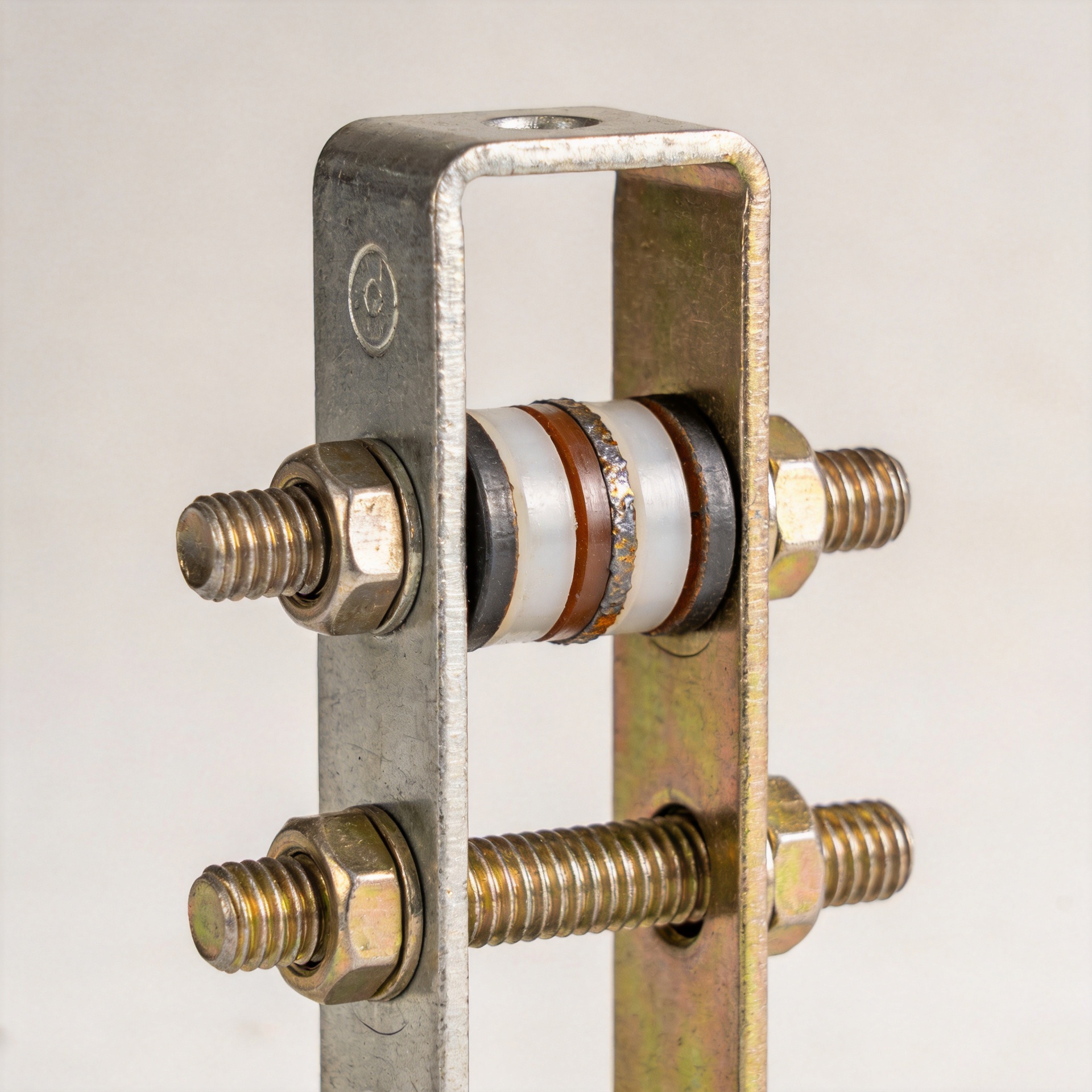
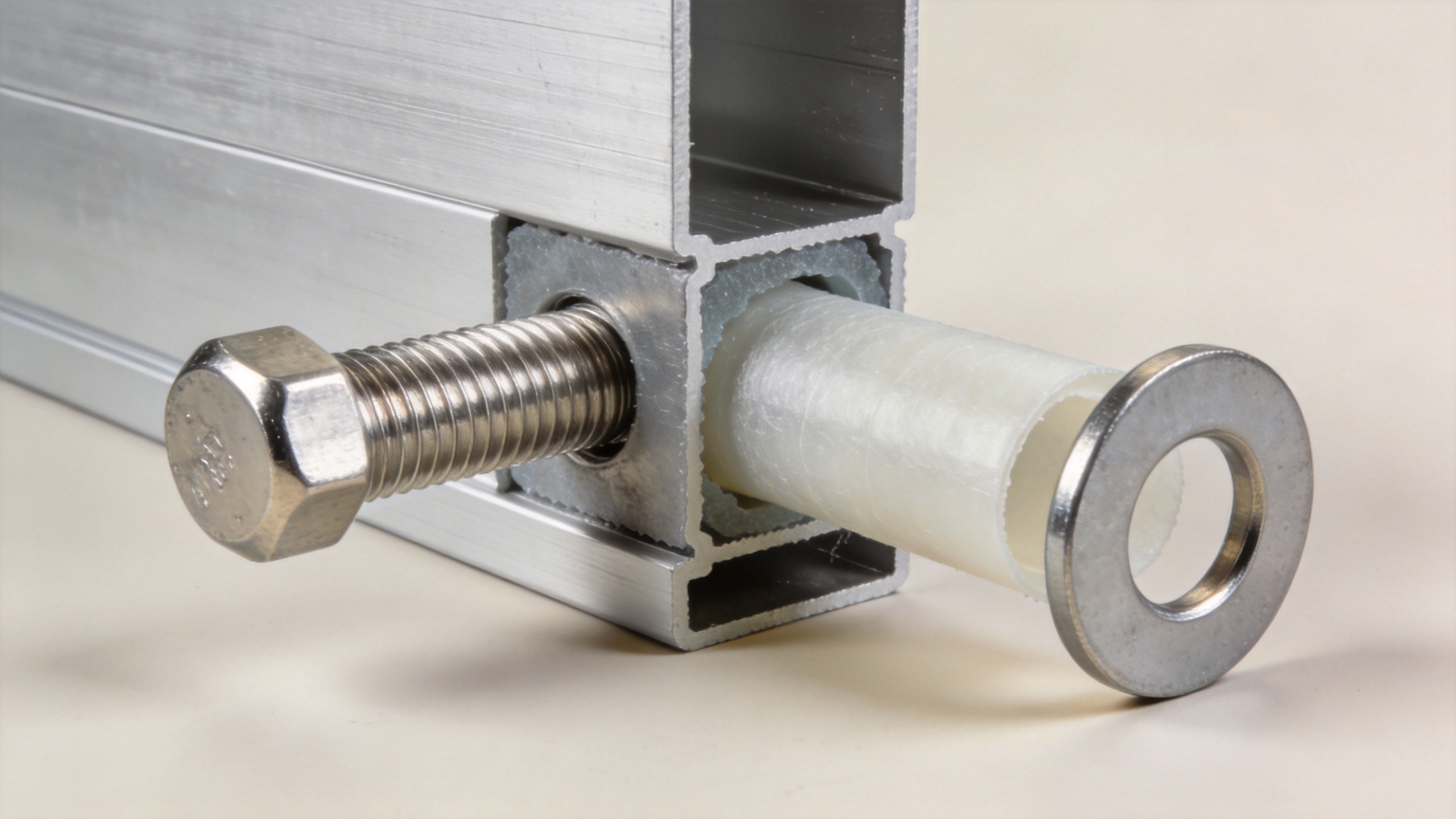
Electrical isolation is often the most direct fix when the load case allows it. Use nonconductive shoulder washers, sleeves, bushings, gaskets, or isolation pads so the shank, head, and nut do not create an unintended metal-to-metal bridge. The isolation part must suit the temperature, clamp load, chemical exposure, and assembly method; a cracked washer does not protect the joint.
- Specify an insulating sleeve where the shank passes through a dissimilar-metal panel.
- Use an insulating washer under the head and nut when both faces could conduct.
- Check that the chosen hardware still maintains required bearing area and preload.
- Inspect for burrs, rough edges, or conductive debris that can defeat the isolation stack.
A custom fastener program can be useful when standard dimensions leave too little room for a sleeve or when the joint needs a captive insulating feature. The design review should document which surfaces are isolated and which remain intentionally conductive.
Choose materials and coatings as a system
Material selection remains important even when isolation is planned. Use a galvanic compatibility review to choose metals that are closer in potential for the expected environment. Where a protective coating is used, define whether it protects the base metal, acts as a sacrificial layer, or provides an electrical barrier. A coating can reduce exposure, but a damaged coating may concentrate attack at a small defect.
Be especially careful with a small anodic component connected to a much larger cathodic surface. The small anodic area can corrode faster because it must support the reaction over the larger cathodic area. This is why a coating choice for a small threaded fastener should be reviewed against the size and material of the surrounding structure, not approved in isolation.
A stainless fastener is not a universal answer. Stainless grades, passivation condition, oxygen availability, and the mating metal all affect performance. In a wet crevice, a stainless selection may solve one concern while shifting attention to the adjoining aluminum or carbon-steel component.
Keep electrolyte out of the joint
Good drainage and drying time often matter as much as material pairing. Orient joints so water does not sit under a head or washer. Seal lap joints where the sealant is compatible with the materials and maintenance plan. Avoid unvented crevices that trap wash water, and route runoff clear of mixed-metal contact areas.
During installation, clean off conductive cutting fluids, salts, and metal chips. Apply any specified sealant or protective compound consistently, then verify torque using the procedure for the actual lubrication state. Changing lubrication without reviewing torque can change clamp load and create another reliability problem.
Install and inspect with a repeatable checklist
- Verify the bill of materials, including washer, sleeve, coating, and nut materials.
- Confirm that the specified mechanical fastener finish matches the approved joint detail.
- Keep isolators intact during hole preparation and assembly.
- Seal or drain locations identified by the design review.
- Record baseline photographs for exposed or safety-critical joints.
- Inspect after the first wet-season or washdown cycle, then set an interval based on observed exposure.
Inspection should focus on early evidence: staining around interfaces, blistered coatings, white corrosion products on aluminum or zinc, loosened preload, and cracked nonconductive components. Correct a local drainage or isolation fault before replacing the fastener; otherwise the replacement may fail in the same pattern.
A practical decision sequence
First, identify the metals and likely electrolyte. Next, determine whether the electrical connection can be broken. Then choose compatible materials or finishes, manage area ratio, and design the joint to drain and dry. Finally, write the isolation stack and inspection requirements into the assembly documentation. This sequence gives design, procurement, and maintenance teams the same basis for choosing every fastener in the joint.
Galvanic corrosion is manageable when it is treated as a joint-system issue. A well-specified fastener, correct isolation hardware, controlled moisture, and inspection feedback work together to preserve clamp load and protect the surrounding structure.